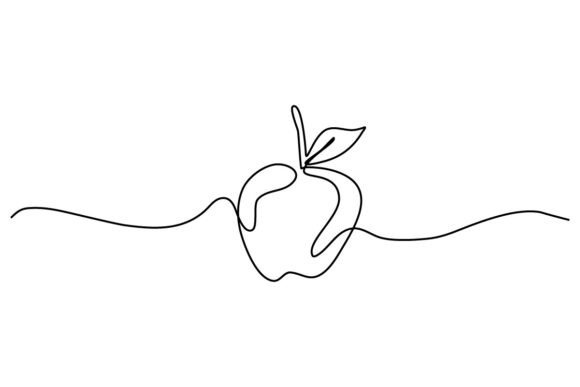
Apple One Continuous Line: A Designer's Review
As someone who has spent years navigating the intersection of digital art and physical stitching, I approach every new machine embroidery design with a specific set of questions. Does it translate well from screen to fabric? Will it hold up under the tension of a hoop? Most importantly, does it bring genuine value to a finished product? Today, I am evaluating the Apple One Continuous Line, a piece categorized under Illustrations and Graphics. At first glance, this design presents a clean, modern take on a classic fruit symbol. It is a decorative element drawn on a white background, promising simplicity. But in the world of embroidery, simplicity is often where the true craftsmanship lies.
The First Impression: Minimalism Meets Texture
When I first opened the preview for Apple One Continuous Line, the mood was immediately clear. This is not a hyper-realistic render with complex shading or gradients. Instead, it relies on the elegance of a single, unbroken path to define the shape of an apple. For a designer, this is both a relief and a challenge. The visual personality is crisp, contemporary, and versatile. It feels like a design that belongs on a boutique apron, a minimalist nursery pillow, or a high-end tote bag rather than a dense, traditional floral blanket.
The continuous line style suggests that if digitized correctly, this could be executed with a running stitch or a very fine satin stitch. The lack of heavy fill areas means less thread consumption and faster run times, which is a massive plus for small business owners looking to scale their production. However, the success of this project hinges entirely on how the lines interact with the fabric texture. On a smooth cotton poplin, this design will look sharp and intentional. On a nubby linen or a fuzzy fleece, those thin lines might get lost without careful planning.
A Real-World Scenario: The Custom Tote Bag Project
To truly understand the potential of Apple One Continuous Line, let’s walk through a practical application. Imagine you are an Etsy seller preparing a collection of eco-friendly canvas tote bags for the upcoming fall season. You want something that screams "organic" and "modern" without being cluttered. You decide to use this apple motif as the central logo on the front of the bag.
In this scenario, the design shines. Because the line work is continuous, it creates a sense of flow that complements the natural weave of the canvas. When I visualize the stitching process, I see the needle tracing that single loop, creating a rhythmic pattern that catches the light. If you choose a deep emerald green or a burnt orange thread against a cream-colored canvas, the contrast will be striking. Customers buying these bags are likely looking for aesthetic appeal and durability. The Apple One Continuous Line offers a professional look that elevates the perceived value of the handmade product. It moves the item away from "craft fair novelty" into the realm of "designer accessory."
However, consider the placement. If you place this design too close to the fold of the bag handle, the tension during sewing might distort the line. Always test your layout on a scrap piece of the same material first. Furthermore, think about the back of the bag. Since this is a single-line design, it might show through less than a dense fill stitch, but using a proper stabilizer is non-negotiable to prevent puckering on the thick canvas.
Navigating Fabric Challenges and Stitch Density
While the Apple One Continuous Line is versatile, it is not a "set it and forget it" design. There are specific situations where you must exercise caution. If you are working with dark fabrics, a single line of thread can disappear if the color isn't vibrant enough. You may need to double the line or add a subtle shadow effect, though that changes the original aesthetic. Similarly, on stretchy fabrics like jersey knit for sweatshirt embroidery, the continuous line could break if the fabric stretches during wear or washing.
For items like baby clothes or delicate tea towels, the stitch density is a critical factor. A design with too much density can make the fabric stiff and uncomfortable against sensitive skin. The beauty of this continuous line concept is its inherent low density, provided it is not over-digitized. You want the stitches to lie flat and soft. If you are converting this graphic into an embroidery file, pay close attention to the pull compensation settings. Without them, the tight curves of the apple stem and leaf might pucker inward, ruining the smooth silhouette.
Also, consider the hoop size. While the design looks compact, you need enough room around the edges to secure the fabric properly. Trying to cram this design into a tiny 4x4 inch hoop on a curved surface like a cap might result in distortion. Flat surfaces like pillow covers or patches are ideal candidates where the geometry of the apple can remain true to the original Graphics file.
Practical Notes for the Professional Maker
If you are considering Apple One Continuous Line for your commercial embroidery projects, here are my top recommendations based on real-world experience:
- Test on Scrap Fabric: Never skip this step. Run the design on a scrap piece of your actual project fabric to check how the thread lays and if the line width is visible.
- Check Thread Colors: Experiment with different hues. A monochromatic look (e.g., grey thread on grey fabric) can be chic, but ensure there is enough contrast for the customer to appreciate the detail.
- Verify File Formats: The listing mentions you will receive EPS, SVG, and JPG files. Remember that these are vector and raster graphics, not necessarily ready-to-stitch machine files (like PES, DST, or JEF). You will likely need to digitize this yourself or hire a digitizer to convert the digital embroidery file assets into a format your machine understands.
- Review Licensing: Before selling finished products, confirm the license terms. Can you sell items made with this design? Are there limits on the number of units? As a small shop owner, protecting your business is just as important as the design itself.
- Use Proper Stabilizer: Even for simple designs, a tear-away or cut-away stabilizer ensures the fabric doesn't warp, keeping that continuous line perfectly straight.
Final Verdict: A Versatile Asset for Modern Makers
The Apple One Continuous Line is a strong contender for designers seeking a clean, modern aesthetic. It fits seamlessly into categories like holiday embroidery for autumn-themed gifts, personalized gift items for teachers, or branding for a farm-to-table kitchenware shop. Its strength lies in its restraint; it lets the quality of your stitching and the choice of materials speak for themselves.
However, it requires a thoughtful approach. It is not a design that hides poor technique. If your tension is off or your hooping is sloppy, the flaws will be obvious in a single-line drawing. But if you execute it well, the result is a sophisticated finished product that commands respect. Whether you are creating a one-off custom apparel piece or launching a new line of handmade products, this design offers a fresh perspective on a timeless symbol. Just remember to do your due diligence on the digitization and licensing before you start stitching.