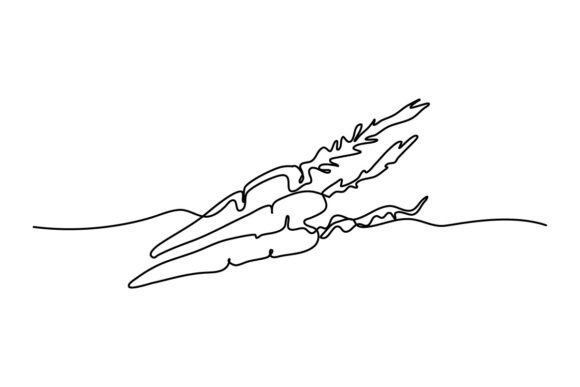
Carrot One Continuous Line Design Review
As a designer who has spent years translating digital graphics into tangible stitched goods, I approach every new asset with a mix of excitement and skepticism. The market is flooded with generic clip art that looks perfect on a screen but falls apart under the needle. When I first opened the Carrot One Continuous Line Design, I was looking for something specific: a vegetable symbol design concept that could elevate a simple handmade product without overwhelming it. This isn't just another illustration; it is a study in minimalism that demands careful handling to truly shine in an embroidery context.
The Visual Impact of Minimalist Vector Art
The first thing you notice about this Graphics file is its confidence. It relies entirely on a single, unbroken stroke to define the shape of a carrot. In the world of machine embroidery design, continuous line art presents a unique challenge and opportunity. Unlike dense fill patterns, this style breathes. It creates a mood that is modern, playful, and slightly whimsical. For an Etsy seller or boutique owner, this aesthetic screams "curated" rather than "mass-produced."
However, the simplicity is deceptive. Because there are no internal details or heavy shading, the integrity of the line becomes the most critical factor. If the digitization process converts this vector into a standard running stitch, the result can look fragile. To make this work as a professional embroidery project, you need to consider how the thread will lay. A satin stitch might be too thick and blocky for such a delicate outline, while a very fine running stitch could disappear on textured fabrics. The visual personality here is clean and crisp, making it ideal for branding elements where clarity is king.
Real-World Application: The Custom Tote Bag Scenario
Let's walk through a real-life scenario. Imagine you are preparing a batch of custom embroidered tote bags for a local farmers' market pop-up. You want the bags to feel organic and earthy. You choose a sturdy, natural canvas fabric. Here is where the Carrot One Continuous Line Design proves its worth. Placed centrally on the front of the bag, the single-line carrot acts as a subtle logo. It doesn't scream for attention but invites the customer to look closer.
In this application, the design transforms from a simple Illustration into a statement of brand identity. Customers react positively to this level of subtlety because it feels like a personalized gift rather than a commodity. If you were to use a complex, multi-colored carrot with leaves and soil, the tote would look cluttered. But with this continuous line approach, the negative space works with the fabric texture to create a sophisticated look. It elevates the perceived value of the finished product, allowing you to charge a premium for what appears to be a simple item.
Navigating Fabric Challenges and Stitch Density
While the design is versatile, it is not universally forgiving. As a reviewer, I must advise caution when applying this to certain materials. On thin, stretchy fabrics like jersey knit t-shirts, a single continuous line can pucker easily if the tension isn't perfect. The lack of anchor points in a dense fill means the thread pulls more against the grain of the fabric. For these applications, using a strong stabilizer is non-negotiable. Without it, the carrot might distort after the first wash, ruining the professional finish.
Furthermore, consider the background color. The original graphic features decorative elements drawn on a white background. While this looks great digitally, stitching a light-colored thread on a dark sweatshirt requires strategic planning. You cannot simply stitch the line; you will likely need a backing layer or a different thread color to ensure visibility. The stitch density must be calculated carefully. Too sparse, and the design breaks up; too dense, and you lose the airy, continuous flow that makes the design special. Always test the design on scrap fabric first to see how your specific machine handles the turns and curves of the carrot shape.
Strategic Uses for Small Business Owners
For the craft business owner, this digital embroidery file offers several distinct advantages beyond just apparel. Think about holiday embroidery projects. A small, embroidered patch featuring this carrot design could be attached to aprons, pillow covers, or even baby clothes. The simplicity allows it to scale down well for smaller hoop sizes, which is often a limitation with more detailed designs. It fits perfectly on a cap panel or as a small accent on a tea towel.
When selling these items, the design helps build customer trust. It signals that you care about aesthetics and quality control. In the competitive landscape of handmade shop owners, having a cohesive collection of items that share this clean, continuous line aesthetic can establish a recognizable brand. Whether you are creating a personalized gift for a gardening enthusiast or stocking a boutique with seasonal kitchen linens, the versatility of this vegetable symbol is a significant asset.
Practical Designer Notes for Success
- Test First: Never skip the test run on scrap fabric. Check how the machine handles the sharp tip of the carrot versus the rounded base.
- Color Contrast: Ensure your chosen thread colors stand out against the fabric. A white thread on a cream canvas will vanish, defeating the purpose of the design.
- Hoop Size Matters: Verify the dimensions fit within your intended hoop size before committing to a production run. Scaling up can sometimes break the continuity of the line.
- Licensing Check: Before selling finished products or offering this as a digital product, confirm the licensing terms. Ensure you have the right to use it for commercial embroidery and resale.
- Mockups: Use black and white printable mockups to visualize how the design sits on different garments before stitching them.
Final Verdict on Commercial Viability
The Carrot One Continuous Line Design is a powerful tool for designers who understand the nuance of minimalism. It is not a "plug-and-play" solution for every situation, but when applied correctly, it yields high-end results. It excels in projects where elegance and simplicity are the goals, such as custom apparel for lifestyle brands or embroidered patches for niche communities. By respecting the limitations of the medium and testing thoroughly, you can turn this simple vegetable symbol into a standout feature of your craft business portfolio. It is a reminder that sometimes, less really is more, provided the execution is flawless.