Garlic One Continuous Line: A Designer's Review
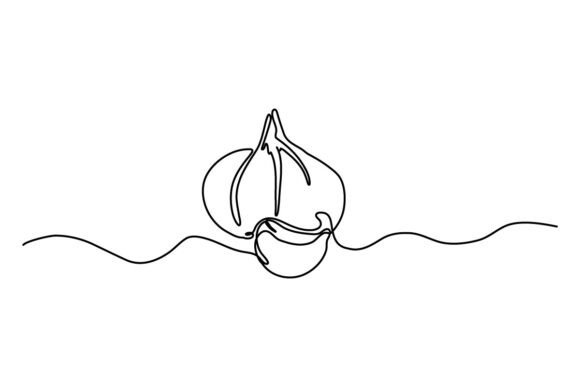
As a designer who spends countless hours translating digital concepts into tangible thread, I approach every new asset with a critical eye. When I first opened the file for Garlic One Continuous Line, I wasn't just looking at another vegetable icon; I was assessing its potential as a functional machine embroidery design. The concept is simple yet striking: a single, unbroken line forming the shape of a garlic bulb. In the world of Illustrations and Graphics, simplicity often wins, but in embroidery, simplicity must translate to stitch integrity. This piece promises a decorative element drawn on a white background, available as EPS, SVG, and JPG files. But does it hold up when you move from screen to fabric?
The First Impression: Minimalism Meets Texture
The visual personality of Garlic One Continuous Line is immediately clear. It exudes a modern, organic vibe that fits perfectly with current trends in kitchen textiles and rustic-chic home decor. The continuous line style creates a sense of flow and movement, avoiding the heavy, blocky look of traditional fill stitches. For an Etsy seller or a small shop owner curating a collection of handmade goods, this design offers a sophisticated alternative to generic clip art.
However, the transition from a flat digital product to a stitched reality requires careful consideration. The "one continuous line" aesthetic relies heavily on precision. In a digital preview, the line looks crisp. In reality, if the stitch density is too high or the thread color doesn't contrast well, the delicate nature of the line can get lost. My initial thought was how this would perform on a linen apron or a canvas tote bag. The organic shape of the garlic bulb suggests a natural, earthy application, making it ideal for kitchen-themed custom apparel or personalized gifts for cooking enthusiasts.
Real-World Application: From Tote Bags to Patches
Let’s talk about a specific scenario. Imagine you are preparing a limited run of embroidered tote bags for a local farmer's market. You want something that signals "farm-to-table" without being overly literal. Garlic One Continuous Line fits this brief perfectly. Placed subtly on the corner of a natural cotton tote, it acts as a signature mark rather than a loud logo. The continuous line allows the fabric texture to show through between the stitches, adding depth to the finished product.
For sweatshirt embroidery, the design could work beautifully as a chest pocket detail. Because the line is singular, it avoids the bulk that can make large designs uncomfortable on heavy fleece. However, the success here depends entirely on your choice of thread colors. On a dark heather grey sweatshirt, a bright white or cream thread would make the design pop, while on a light oatmeal sweater, a deep charcoal or forest green might be more appropriate. Always test your embroidery file on scrap fabric first to ensure the contrast is sufficient for the target audience.
I also see great potential for this as an embroidered patch. If you are creating patches for craft fairs or boutique merchandise, the clean lines of the garlic symbol will cut out cleanly. Unlike complex applique design projects that require multiple layers of fabric, this graphic can be stitched directly onto felt or twill backing. This reduces production time and material costs, which is a crucial factor for any craft business scaling up operations.
Navigating Challenges: Fabric and Hoop Considerations
While Garlic One Continuous Line is versatile, it is not without its challenges. The continuous line style means there are no internal fill stitches to anchor the design. This makes it susceptible to shifting on stretchy fabrics like jersey knit or thin silk. If you attempt this on a baby onesie made of soft cotton, you must use a high-quality stabilizer to prevent puckering. Without proper support, the tension of the needle pulling the thread could distort the elegant curve of the garlic bulb.
Another area of caution is the hoop size. While the design appears compact, the continuous nature of the line means it may require a larger hoop than expected to maintain tension throughout the entire stroke. If you try to cram it into a tiny 4x4 hoop, the machine might struggle to navigate the curves smoothly, leading to skipped stitches or uneven spacing. Always check the dimensions of your digital embroidery file against your machine's capabilities before committing to a client project.
Furthermore, consider the surface you are stitching on. Curved surfaces, such as the brim of a cap, can be tricky for continuous line designs. The needle angle changes constantly on a curve, which can cause the thread to lay unevenly. For a cap embroidery project, you might need to adjust the stitch type or add a few anchor points to keep the line stable. Similarly, on textured fabrics like denim or burlap, the fine details of the line might get swallowed by the weave of the material. In these cases, using a slightly thicker thread or a running stitch variant might enhance visibility.
Enhancing Product Value and Brand Consistency
Using a design like Garlic One Continuous Line can significantly elevate the perceived value of your handmade items. Customers today appreciate thoughtful, artistic touches over mass-produced graphics. When a buyer sees a carefully stitched, minimalist symbol on a pillow cover or tea towel, they recognize the craftsmanship involved. This attention to detail builds customer trust and encourages repeat business for your small shop product line.
For those selling digital product assets, this design serves as an excellent example of how vector-based Graphics can be adapted for physical creation. By offering this as part of a bundle, you provide value to other makers who want to create their own personalized gift items. However, remember to clarify licensing terms. Ensure that your customers understand whether they can sell finished goods made with this design or if it is for personal use only. Clear communication protects both you and the end-user.
Practical Notes for the Embroidery Designer
Before you start stitching, take a moment to review the technical aspects. Since the package includes EPS, SVG, and JPG formats, you have flexibility. Use the SVG or EPS for importing into your embroidery software to convert the vector lines into stitch data. The JPG is useful for creating printable mockup previews to show clients what the final result might look like.
Here are my top recommendations for working with this design:
- Test Stitch Density: Convert the file and run a test on a scrap piece of your intended fabric. Adjust the stitch length if the line appears too jagged or too dense.
- Check Thread Contrast: Ensure the thread color stands out against the fabric. A low-contrast combination can make the continuous line disappear.
- Use Proper Stabilizer: Especially for lightweight or stretchy materials, a tear-away or cut-away stabilizer is essential to maintain the shape of the garlic bulb.
- Verify Licensing: Confirm that the license allows for commercial use if you plan to sell the finished product or use it for commercial embroidery projects.
- Mockup in Black and White: Sometimes color distracts from the form. Viewing the design in grayscale helps you assess the clarity of the line and the balance of the composition.
In conclusion, Garlic One Continuous Line is a charming and practical addition to any designer's toolkit. It bridges the gap between modern illustration and traditional craft, offering a fresh take on botanical motifs. Whether you are decorating a holiday gift, branding your boutique, or simply exploring new techniques, this design provides a solid foundation for creative expression. Just remember that the magic happens in the execution—test, adjust, and let the thread do the talking.